What Are RWAs: From Experiment to Infrastructure
%202.jpg)
Table of contents:

Definition and Context
Real-world assets, or RWAs, are traditional financial instruments put onto blockchain networks in digital form. We're talking about gold, Treasury bonds, company stocks, loans, real estate, and other assets that have generated returns for decades and proven their staying power in the market. Blockchain allows us to create a digital representation of ownership rights to these assets, giving investors direct access through digital wallets instead of going through traditional depositories and middlemen.
This process is called tokenization: creating a digital version of a physical or traditional financial asset while keeping all the ownership rights and regulations from the original jurisdiction. The security of these transactions comes from verification standards, reserve certification, and a public ledger that anyone can check.
The Market in Numbers: Explosive Growth
By mid-August 2026, the RWA market was valued at $31.6 billion.
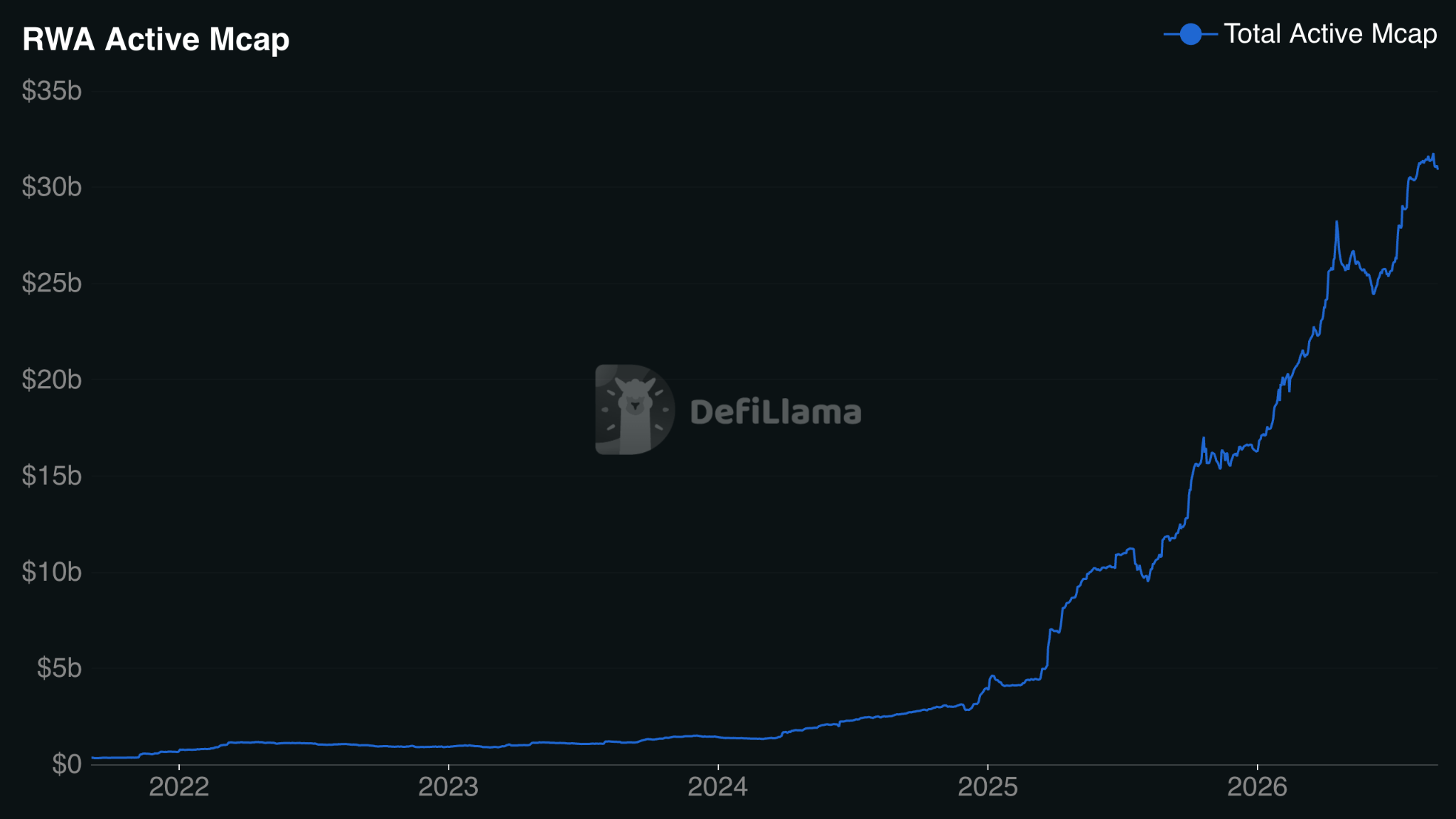
That's impressive when you consider that just a year earlier, tokenized assets were worth $10.8 billion. A threefold increase in one year shows this isn't just casual interest anymore, and institutional investors are moving from curiosity to serious capital deployment.
The long-term forecast is even more striking. Analysts predict that by 2030, tokenized assets could reach $4 to $16 trillion. That means the market could grow 130 to 500 times from today's levels. These ambitious figures aren't speculation. They're backed by actual announcements from the biggest players in global finance.
Why Now: The Growth Triggers
Over the past 18 months, a series of events has transformed tokenization from a niche trend into mainstream financial infrastructure.
First, instant settlement and 24/7 trading have changed the economics of transactions. When you buy a tokenized asset, the payment and the asset transfer to you the moment the transaction is verified - not days later like traditional systems. This means your capital works harder and your costs drop significantly. Plus, these assets can be used as collateral in decentralized finance platforms, opening new earnings opportunities and liquidity channels for investors.
Second, regulatory approval turned speculation into strategy. In December 2025, the U.S. Securities and Exchange Commission (SEC) issued a No-Action letter to the Depository Trust Clearing Corporation (DTCC), which essentially is the infrastructure behind the entire U.S. securities market. This letter cleared the way for DTCC to offer custody and settlement services for tokenized assets starting in the second half of 2026. At the same time, the New York Stock Exchange (NYSE) announced its building a platform for trading and settling tokenized securities with 24/7 operation and instant settlement. Nasdaq announced a partnership that will let companies issue programmable stocks with automated dividend payments, voting, and buybacks.
Third, retail demand proved this isn't just for institutions. When platforms like Robinhood and Kraken launched tokenized stock trading for regular investors in June 2025, it wasn't a marginal product. Within nine months, Kraken recorded $3.6 billion in transaction volume and $225 million in peak holdings across 80,000 wallets. The demand is real. (Source - https://www.franklintempleton.lu/articles/2026/digital-assets/revolution-not-evolution-detangling-tokenization-of-rwas)
Market Structure: Where Capital Concentrates
The RWA market isn't evenly distributed. The biggest chunk of capital goes into bonds, which makes sense, since bonds are the largest and most liquid category of financial assets globally. Treasury bonds, municipal bonds, corporate bonds - all of them are being tokenized across all regions.
Second comes precious metals, especially gold. That's logical: gold is still a global standard of value, and creating a digital version with full reserve verification opens it up to any investor, regardless of location. No more geographical barriers.
Private credit takes third place. This is lending from non-bank lenders to mid-sized companies and riskier borrowers. Tokenization solves a real problem here: private loans are fragmented and hard to sell. By creating tokenized credit funds, asset managers can transfer portions of their portfolios without selling the underlying loans themselves.
Next come public stocks, private equity, reinsurance, and various derivatives. The total across all 15 asset categories already exceeds $30 billion, and each is growing at different speeds: bonds growing steadily, private credit accelerating, stocks entering scale mode.
Key Players: From Crypto-Native to Finance Giants
Two types of organizations are driving tokenization: crypto-native platforms and traditional asset managers.
Franklin Templeton, one of the oldest names in asset management, launched the first tokenized fund back in April 2021. Their blockchain money-market fund has been running non-stop for five years now, and by August 2026, assets under management exceeded $2.6 billion.
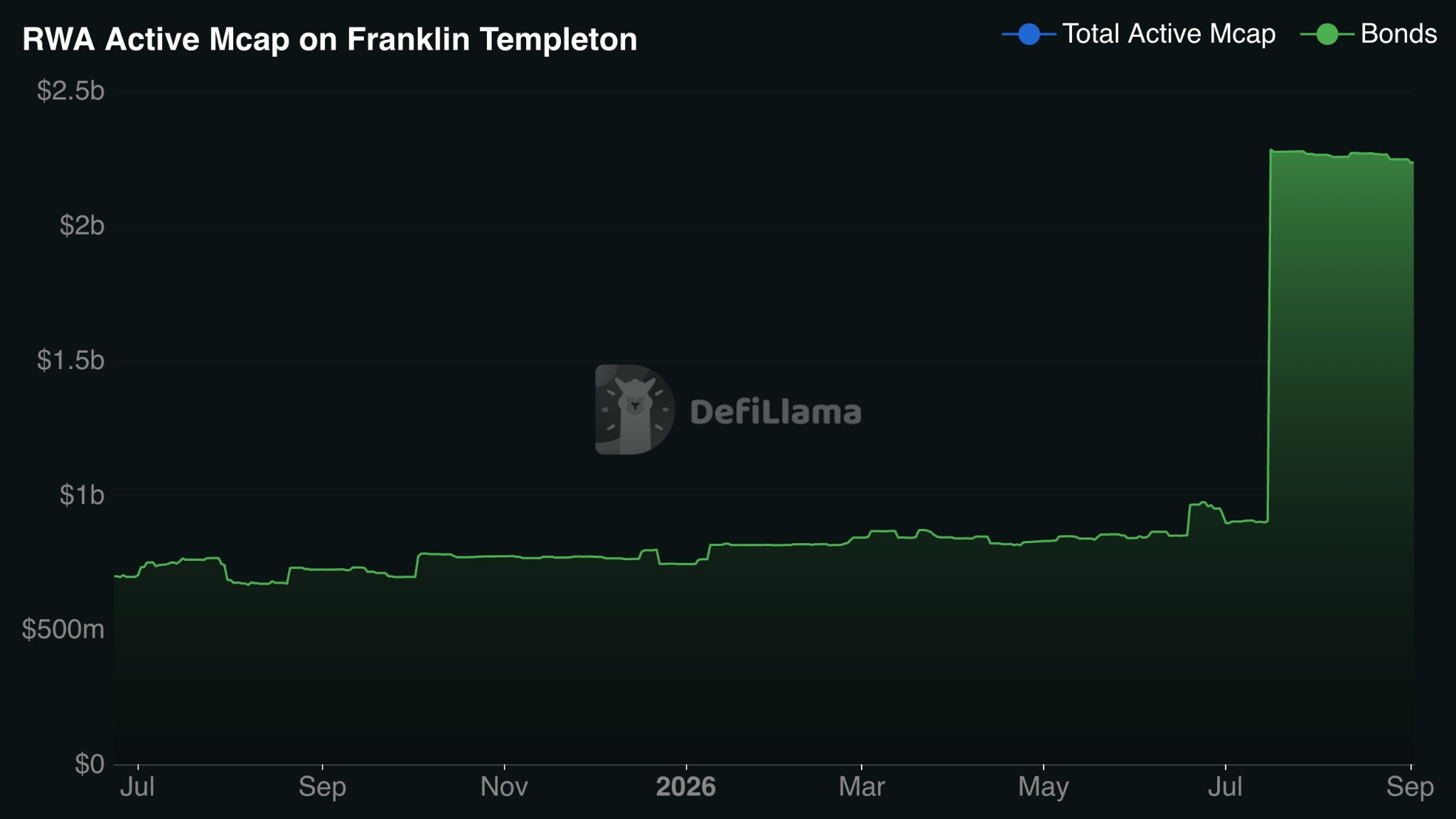
For Franklin Templeton, this isn't an experiment, it has become a core product driving their shift to blockchain infrastructure.
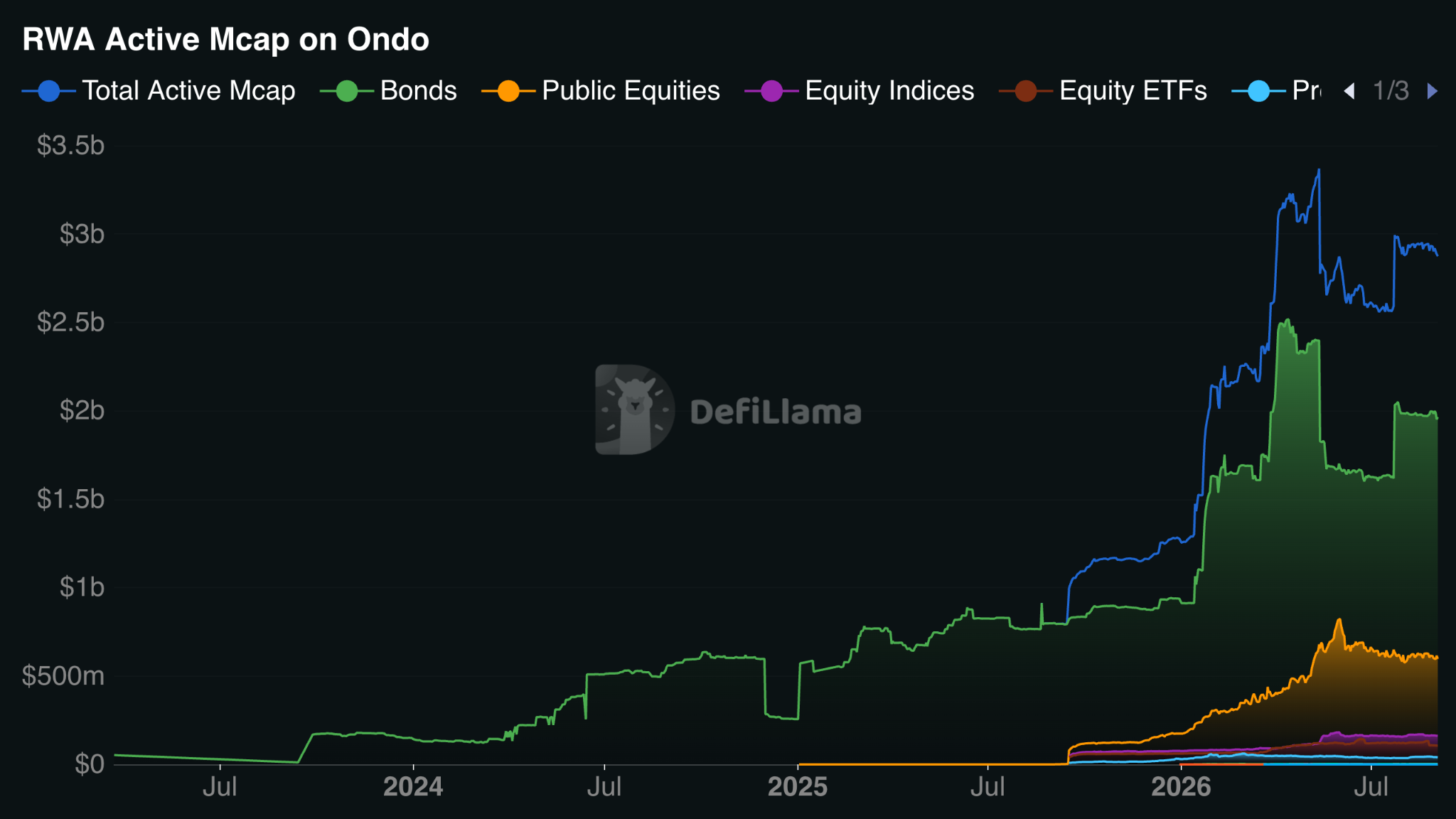
Ondo Finance, founded in 2021, took a different path. It started as a decentralized finance platform and gradually became the bridge between traditional finance and blockchain. By 2026, Ondo launched its own blockchain network (Ondo Chain), custom-built for institutional partners. The platform manages several billion dollars in tokenized funds
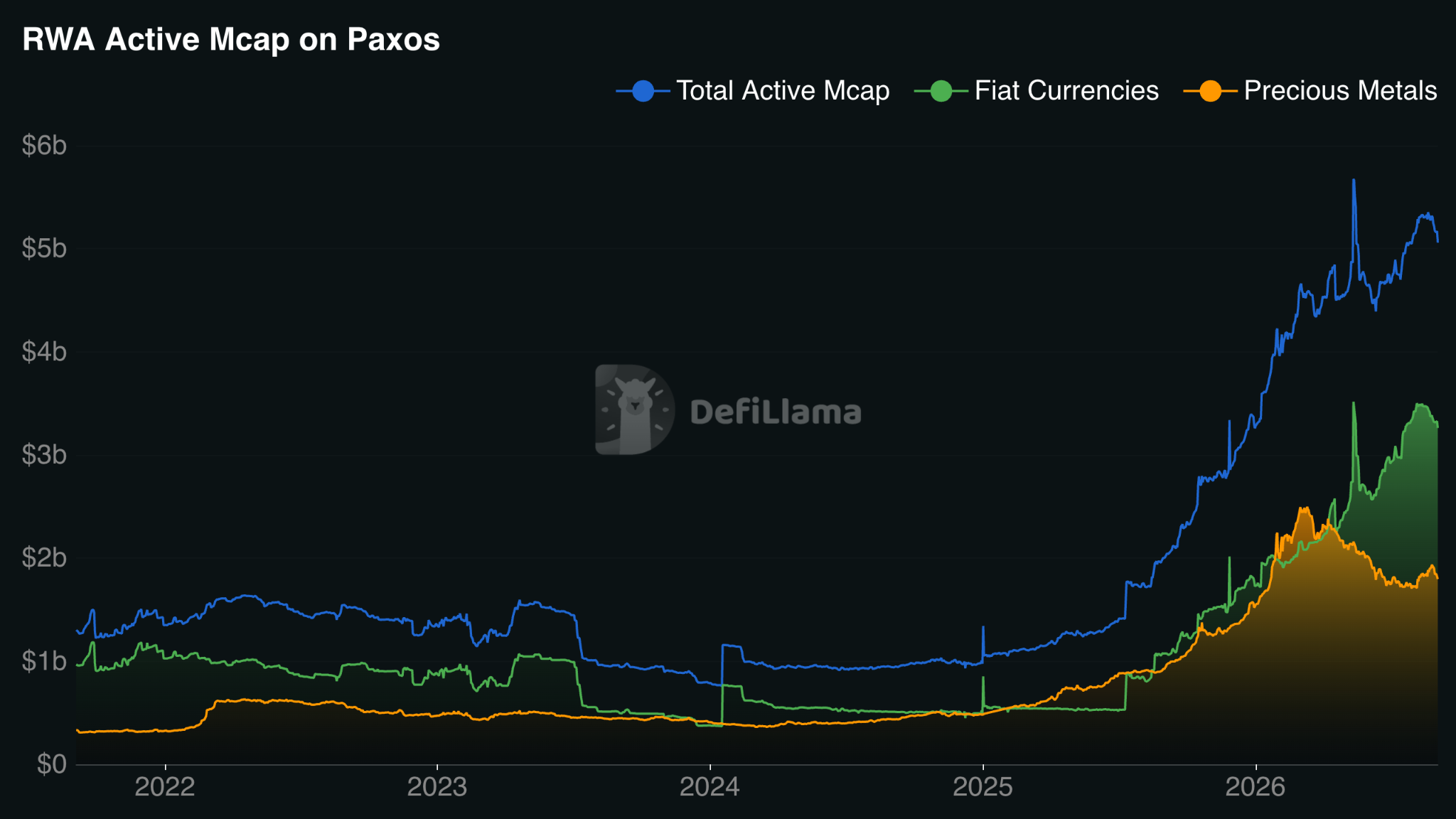
Paxos, founded in 2012 as a blockchain infrastructure provider, has expanded into partnerships with banks and payment systems worldwide. Their specialty is tokenizing precious metals, especially gold. Paxos guarantees authenticity and reserves, which matters to gold investors
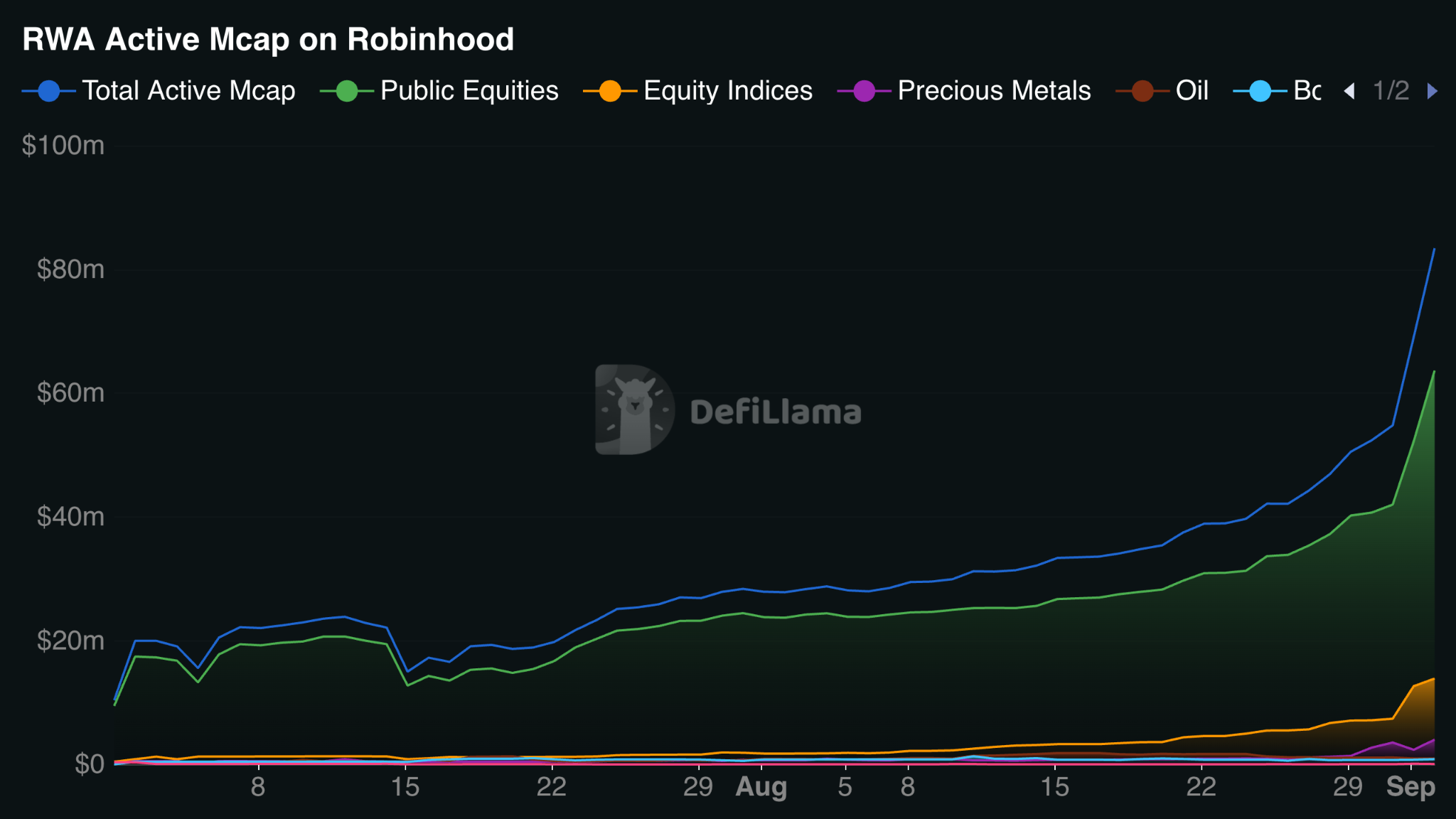
On the retail side, Robinhood launched trading in over 200 tokenized U.S. stocks for European customers in June 2025. They position this as a way to bypass barriers to entering Western markets
Kraken, a cryptocurrency exchange, launched xStocks on Ethereum and Solana networks for investors outside the U.S. and restricted jurisdictions, trading Monday through Friday (Source: https://www.kraken.com/xstocks).
The Blockchains: Building the Infrastructure
Today's RWA market runs on four main blockchains: Ethereum, Solana, BNB Chain (Binance's network), and Polygon. Ethereum dominates by volume. Solana attracts credit funds and investment vehicles because it's cheaper. BNB Chain is growing fast thanks to Binance support. Polygon serves as an alternative to Ethereum with lower fees.
But the landscape could shift in 2026–2027. Stellar has announced plans to host the DTCC itself, the actual settlement infrastructure for U.S. securities. If that happens, Stellar becomes the settlement layer for traditional securities, while Ethereum remains for experiments and alternatives.
Regional players are emerging too. Developing economies in Asia (Vietnam, Hong Kong, Thailand) are building their own blockchain infrastructure so they can offer tokenization and institutional trading without needing Western brokers as middlemen.
Risks: What Could Slow Growth
Despite the optimism, the RWA market faces serious obstacles:
- Fragmented liquidity. Assets are scattered across different blockchains, making buying and selling difficult. If you own a tokenized bond on Ethereum, you can't easily sell it on Solana because you need bridges, swaps, or transfers, each adding fees and risk.
- Legal uncertainty. Rights to a token are interpreted differently in different countries. A token issued in the U.S. follows American regulators. One issued in the UAE follows Emirati rules. This makes cross-border deals complicated.
- On-chain and off-chain mismatches. The token exists on the blockchain, but the physical asset sits in a vault or on a ledger somewhere. If that vault closes or the counterparty stops serving you, owning the token isn't enough. This is counterparty risk that blockchain can't eliminate.
- Regulatory instability. The rules are still being written. Tomorrow's restrictions could reshape the game. If the SEC suddenly banned a certain class of tokenized assets, investors could see their positions lose value fast.
Conclusion: From Experiment to Standard Practice
Tokenization isn't a late-2010s experiment anymore. It's now feels like the core strategy for the world's biggest financial organizations. Franklin Templeton, Ondo, Paxos, NYSE, Nasdaq, DTCC - these aren't small players. They're anchors of the global financial system.
The jump from $10.8 billion to $31.6 billion in one year confirms the shift is accelerating. Predictions of $4-16 trillion by 2030 might sound bold, but they're backed by concrete actions from regulators and real money from investors.
The next 12-24 months will decide whether tokenization becomes the standard for trading and holding securities, or stays a specialized niche. The current trajectory points to the first scenario. The question isn't whether tokenization will happen-it's how fast it will move and which barriers will be overcome along the way.
Expertise in Asset Tokenization
At Rock'n Block, we are actively developing our expertise in the tokenization of various types of assets. We already have practical experience in the tokenization of real-world assets (RWAs), including specific cases involving the tokenization of physical assets, warehouse inventories, and gold.
At the same time, we are open to new challenges and unconventional projects from developing an initial concept and assessing the tokenization potential of a specific asset to designing a comprehensive solution and delivering its full technical implementation.
We can help evaluate different approaches, identify the most suitable tokenization model, and guide the project through the entire journey from the initial concept to a fully functional solution.

%20(1).jpg)



%201.webp)